


Joinery and Woodwork in Fit-Out Design
Interior fit-outs are about converting an empty shell into a fully functional space. In this transformation, joinery serves as a cohesive element that links floors, walls, ceilings, and services. Unlike movable furniture, architectural woodwork & joinery is permanent, tailor-made, and synchronized with structural and MEP systems.
Its scope includes:
- Spatial definition: Crafting partitions, decorative walls, and transitions
- Functionality: Uniting storage, workspaces, and service entry points
- Brand expression: Instilling identity with materials, textures, and detailed finishes
Material Strategy and Buildability
Choosing materials for joinery requires a careful balance between design goals and practical buildability, as well as ensuring long-term performance. Frequently utilized materials consist of:
- Plywood and MDF substrates for their structural integrity and ease of machining
- Natural veneers that provide luxurious finishes with genuine grain patterns
- High-pressure laminates (HPL) are known for their resilience in busy areas
- Solid wood components that add accents and a rich tactile experience
- Acoustic Panels and Wall Treatments-Fabric-wrapped panels, perforated wood, and PET acoustic boards are widely used to absorb mid-to-high frequency sounds. These are often integrated into feature walls, branding elements, or partitions, ensuring functionality without compromising design intent
In areas prone to high humidity and temperature fluctuations, it is crucial to use moisture-resistant boards, ensure proper sealing, and incorporate expansion detailing to avoid issues like warping or delamination.
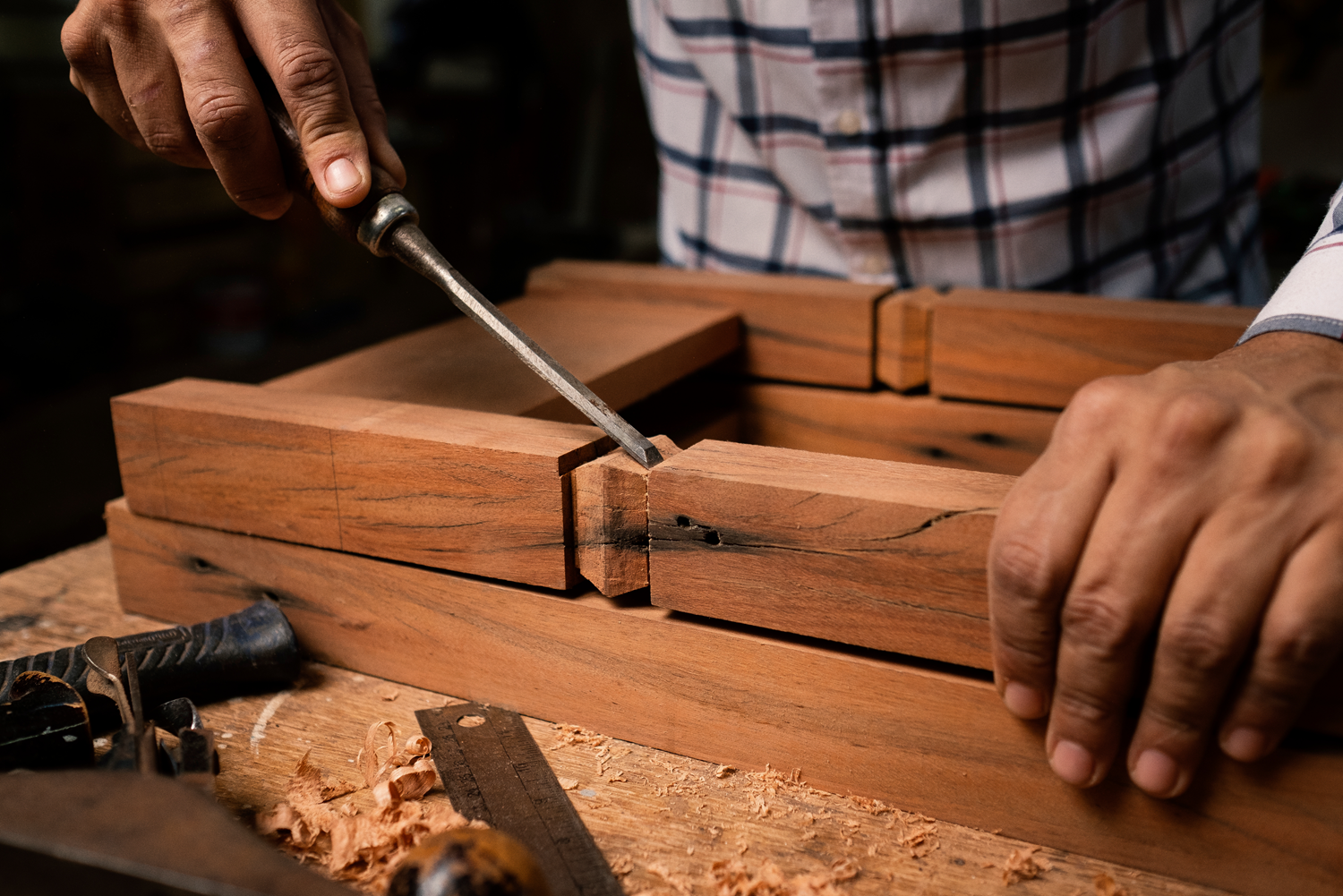
Architectural joinery and woodwork in interior fit-out is frequently regarded as a technical construction trade; however, it is, in fact, one of the most artistic and skill-demanding fields within the built environment. Each completed piece-be it a reception desk, wardrobe, wall panel, or staircase results from numerous layers of craftsmanship working harmoniously. It is not merely the outcome of a single skill, but rather the collaboration of various specialists whose collective expertise turns raw materials into architectural artistry.
At its essence, joinery represents the intersection of design and human skill. It is the point where engineering, material understanding, and artistic vision come together to produce furniture and built-in features that serve as extensions of the space itself, rather than just isolated objects.
Fabrication and Installation Process
Architectural joinery is usually produced off-site in regulated factory environments utilizing CNC machinery for precision and consistency. Even slight variations on-site need to be addressed with accurate measurements and expert craftsmanship to uphold alignment and finish quality.
This method guarantees:
- Uniform quality throughout components
- Decreased on-site labor and installation duration
- Enhanced control over finishes and tolerances
Applications in Interior Fit-Out
- Corporate Offices: Workstations, storage walls, meeting room paneling, and reception desks shape both functionality and brand identity.
- Retail Spaces: Display units and shelving systems need to harmonize aesthetics with durability and adaptability.
- Hospitality: Guest room furniture, wall cladding, and custom fixtures foster immersive experiences.
- Residential Fit-Outs: Kitchens, wardrobes, and custom furniture require precision and personalization.
Joinery as a Collaborative Craft, Not Just a Single Skill
In contrast to mass-produced furniture, architectural joinery seldom stems from a solitary process or individual. It is a collaborative workflow that encompasses various specialized trades, each contributing unique skills and expertise:
Designers and joinery engineers convert architectural visions into detailed fabrication drawings and technical specifications.
Carpenters and woodworkers physically shape, assemble, and construct the fundamental structure of joinery components.
CNC machine operators infuse digital precision into intricate cuts, curves, and repetitive parts that demand high accuracy.
Carvers and detail craftsmen introduce handcrafted features like grooves, patterns, and decorative reliefs that machines cannot replicate with the same sensitivity. Painters and finishers elevate raw surfaces into polished visual masterpieces through techniques like polishing, staining, lacquering, or applying specialized coatings.
Each role signifies a unique level of expertise and interpretation. A CNC operator emphasizes tolerance, a carver prioritizes texture and artistry, a painter concentrates on surface depth, tone, and visual harmony. The ultimate success of the final product hinges on the seamless alignment of all these disciplines.
Conclusion
Architectural joinery and woodwork serve as the backbone of successful interior fit-out projects. They represent a unique blend of applied art and technical skill. This process relies on the teamwork of various skilled artisans, each bringing their own expertise, ranging from machine accuracy to handcrafted details and polished finishes.
In today's world, carpentry transcends traditional wood and MDF, functioning as a system for material integration that merges various products into cohesive architectural components. The result is more than mere furniture - it creates spatial infrastructure - elements that shape the way interiors are perceived, utilized, and cherished. They influence the organization, experience, and long-term maintenance of spaces. More than just visual appeal, they provide functionality, integration, and durability, making them an essential investment in any constructed environment. In a competitive and detail-oriented market, the distinction between a mediocre and an outstanding fit-out frequently hinges on the quality of its joinery. .
VITA CASA APPROACH
Vita Casa takes a holistic approach to architectural joinery in interior fit-outs, treating it as a unified system where design, functionality, and precise execution harmonize across all components:
- Organized storage solutions: Custom wardrobes and walk-in closets featuring personalized layouts, integrated lighting, and sophisticated compartmentalization.
- Harmonized bedroom and living components: Headboards, vanities, consoles, and media walls that resonate with the overall interior theme.
- Functional shelving: Open and concealed shelving along with custom workstations crafted for usability and aesthetic clarity.
- Architectural detailing: Wall paneling, ceilings, doors, staircases, and transitions designed for consistency in proportion and materiality.
- Industry-specific solutions: Joinery for office, retail, hospitality, healthcare, and wellness sectors customized for performance, durability, and brand coherence.
- Cutting-edge fabrication: CNC-cut panels, curved joinery, and intricate geometries produced with exceptional precision.
- High-end materials: Premium veneers and solid wood finishes sourced from Italy and Europe.
- Sound performance: Acoustic panels seamlessly integrated to improve sound quality while preserving design integrity
This methodology guarantees a unified, high-performance environment characterized by craftsmanship, technical precision, and exquisite detailing.