


Dressing Rooms : Function, Luxury, and Precision
Dressing rooms are no longer regarded as mere secondary areas in interior fit-out projects. They have transformed into highly functional, detail-oriented spaces that merge storage efficiency with a pronounced sense of personalization. Whether incorporated into residential designs, hospitality suites, or upscale retail settings, dressing rooms embody a harmony of spatial planning, material choice, and user experience.
The Role of Dressing Rooms in Modern Interiors
A dressing room functions as a transitional area between storage and daily activities. It represents the intersection of organization and practicality. In the context of interior fit-out design, this space must address both functional needs and lifestyle preferences. Inadequately designed dressing rooms can lead to disorder, inefficiency, and underused space, while well-planned designs provide a cohesive and user-friendly experience.
The relevance of dressing rooms has escalated alongside the growing demand for bespoke interiors. Clients are increasingly looking for personalized storage solutions instead of conventional wardrobes. As a result, fit-out methodologies now view dressing rooms not merely as hanging rods and shelves, but as distinct areas with their own design language, lighting approach, and material selection.
Layout Geometry
The layout is the cornerstone of any dressing room. Planning the fit-out starts with evaluating the available space and establishing circulation paths. Typical designs feature walk-in closets, U-shaped arrangements, linear wardrobes, and dressing rooms centered around an island.
Effective layouts focus on accessibility and visibility. It is crucial to have clear zoning, which usually includes:
- Hanging sections for both long and short garments
- Drawer systems for smaller items
- Shelving for folded clothing
- Dedicated spaces for accessories, shoes, and bags
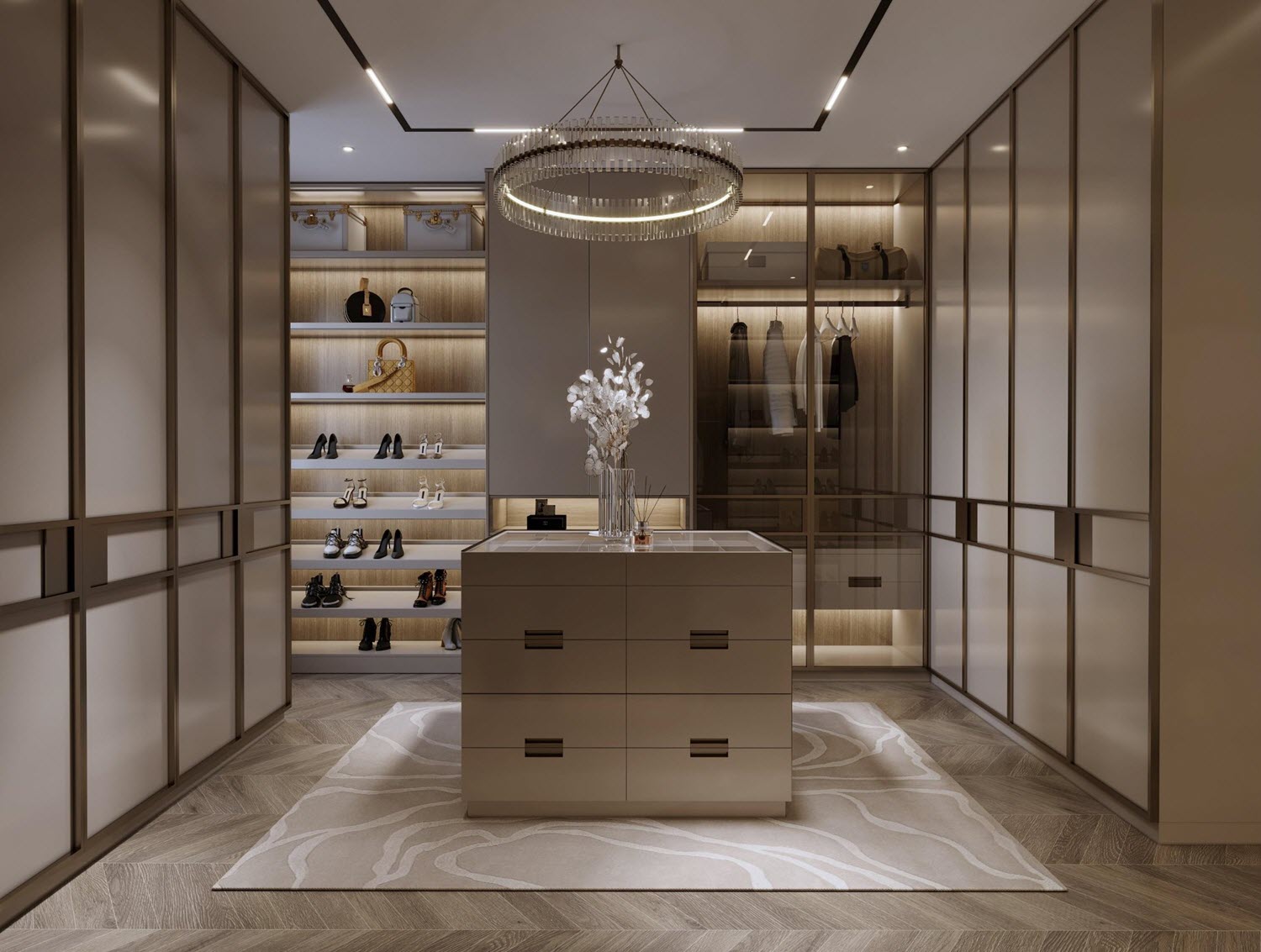
The width of circulation paths is also vital. A minimum clearance is necessary to facilitate comfortable movement, particularly in walk-in designs. In high-end layouts, central islands are added to enhance storage and display options without hindering flow.
Three main configurations are prevalent in contemporary floor plans:
- The Galley: This design features parallel cabinetry that creates a sleek, runway-like atmosphere. It is perfect for narrow spaces where every inch of floor area is utilized for movement.
- The U-Shape: This configuration offers an immersive experience, surrounding the user with their wardrobe, maximizing storage capacity while providing a sense of enclosure.
- The Island Configuration: For larger spaces, a central island serves as a staging area for accessories and essential drawer space, acting as the focal point of the room.
Material Selection and Finishes
The selection of materials in dressing rooms plays a crucial role in determining durability, maintenance, and visual appeal. Unlike typical wardrobes, dressing rooms often incorporate a range of finishes to create depth and contrast.
Common material strategies include:
- Laminates and engineered wood for structural elements
- Veneers for a polished, natural finish
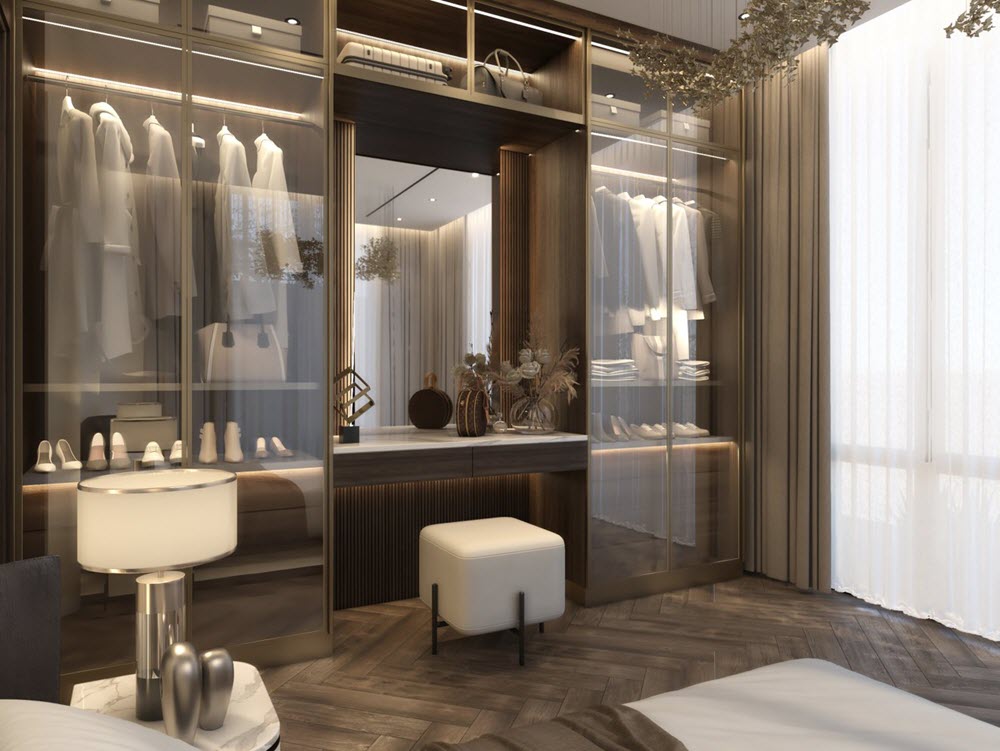
- Glass panels for display sections
- Metal accents for framing and detailing
- Leather or fabric inserts for upscale compartments
Matte finishes are frequently preferred for a softer, more refined look, while gloss finishes can enhance brightness in smaller spaces. Consistency in materials with the overall interior design is vital to ensure cohesion within the complete fit-out.
Lighting Design
Lighting is a fundamental aspect of dressing room design. It should provide precise visibility while enhancing the overall atmosphere. Standard warm bulbs can misrepresent colors, leading to potential wardrobe malfunctions when the individual steps into natural daylight. Professional fit-outs emphasize a high Color Rendering Index (CRI), ideally 90 or above, to ensure that all colors look perfect.
Layered lighting strategies are generally implemented:
- Ambient lighting for general illumination
- Task lighting incorporated into shelves, drawers, and hanging sections
- Accent lighting to highlight display areas
LED strip lighting is popular due to its flexibility and energy efficiency. Backlit panels, sensor-based lighting, and concealed fixtures are often integrated to create a seamless appearance. Integrated LED strip lighting within cabinetry provides shadow-less illumination, ensuring that the bottom shelf is as visible and accessible as the top. Proper selection of color temperature is vital for accurate perception of clothing colors.
Mirrors, a crucial component in dressing rooms, require carefully positioned lighting to avoid shadows and distortion. Vertical lighting on either side of the mirror is generally more effective than overhead-only solutions.
Dressing Rooms as a Design Statement
In the context of interior fit-out design, dressing rooms symbolize a combination of precise planning, material expertise, and a user-focused approach. They are thoughtfully designed environments that facilitate daily routines while reinforcing the overall design theme.
An effectively designed dressing room ensures efficiency, comfort, and visual coherence. When carefully integrated into a fit-out project, it enhances both the functionality and perceived value of the space. Beyond their practical aspects, dressing rooms contribute significantly to the overall identity of a space. In luxury fit-outs, they are designed as extensions of the bedroom or suite, often showcasing the same level of detail and material excellence.
Glass-front wardrobes, open display ideas, and boutique-style configurations elevate dressing rooms into visually appealing spaces. In retail contexts, similar strategies are applied to enhance customer engagement and product presentation.